Founding Ancestors and Pioneers
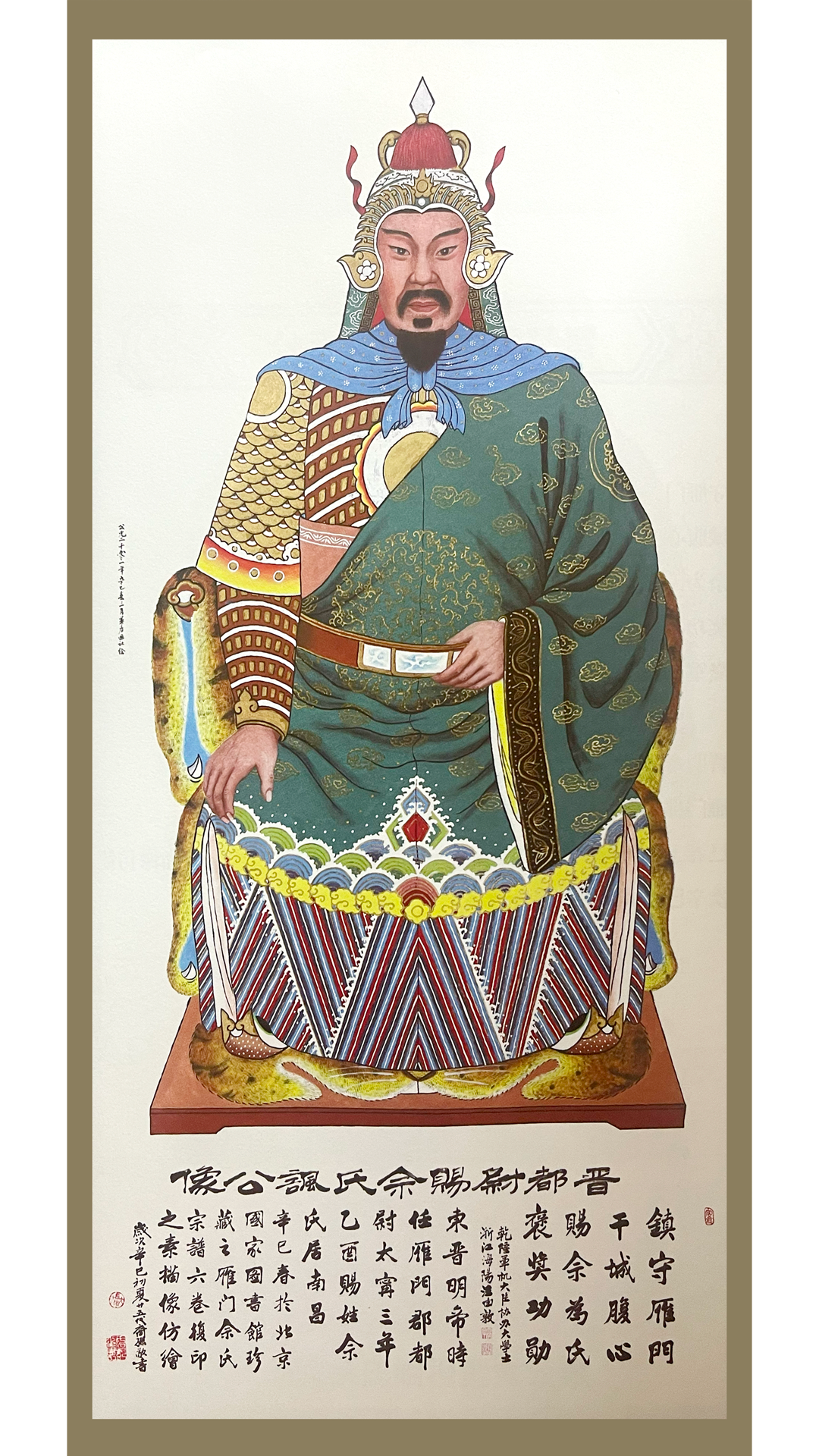
Clan Founder Wan Gong (顽公) Seah
Seah Wan Gong (born in 280 CE during Western Jin Dynasty, originally named Yu Feng) changed his surname to avoid a taboo. His son, Seah Zhao Yuan, served as the Great General of National Defense, achieved military merits in western expeditions, and was bestowed the title of Great General of Zhenhai. He was also granted the title of Yanmen, and from that time onwards, the Seah surname was officially recognized in Chinese genealogy.
According to legend, Emperor Yan was born near the Jiang River (present-day Baoji, Shaanxi) and thus took the surname Jiang. The Yellow Emperor was born near the Ji River (present-day Wugong County, Shaanxi) and thus took the surname Ji. Historical documents show that the Seah and Yu surnames share the same origin. According to the ‘Ma Renshan Seah Clan Genealogy,’ during the Eastern Jin Dynasty under Emperor Ming’s Taining era, in the year 323 CE, Sima Shao granted Yu Feng the surname Seah and renamed him Seah Wan, who became the ancestor of these Seah lineages. His son Seah Zhao Yuan rose to the position of Great General of Zhenhai and Military Commissioner, and was granted the title of Yanmen for his military achievements. Scholars have thus concluded that Emperor Hui (Sima Zhong) bestowed the Seah surname upon Yu Zhao Yuan, making Seah Zhao Yuan the second founding ancestor of this Seah lineage.
According to the ‘Yanmen Commandery Seah Clan Genealogy’ maintained by the Ma Renshan area Seah descendants, the first-generation ancestor was Seah Zhao Yuan (courtesy name Jun Zhang), born during the Western Jin Dynasty (around 304 CE). Later, Yu Zhao Yuan General followed Emperor Wu in conquering Yanmen Pass (present-day Yanmen Pass in Shanxi Province). Sima Yan was greatly pleased and said to Yu Zhao Yuan: ‘Your achievements are unparalleled, worthy of the highest honor. I hereby bestow upon you the title of Great General of Zhenhai and grant you the surname Seah.’
The Seah surname originated from the Yu surname. After Yu Wan’s son Zhao Yuan was granted the Seah surname, the clan first settled in Yanmen County, and their descendants spread far and wide, with numerous branches difficult to fully document. Thus, only the main lineage is recorded here for posterity. Yanmen County: Located at the ancient site of Yanmen Commandery in the Jin state, now in Shanxi Province, 350 li east of Taiyuan Prefecture and approximately 30 li from Yanmen Pass.
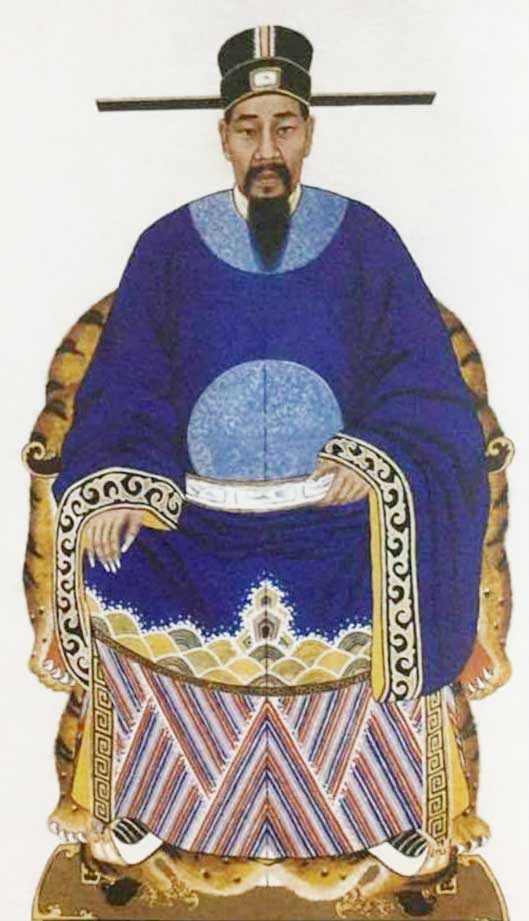
Teochew-Swatow Seah Clan Founder Kuan Da Gong
Seah Kuan Da, courtesy name Liang (also known as Tao Shan Gong), was the 33rd generation descendant of Seah Wan. Born in 1267 during the Southern Song Dynasty, he traveled from Putian, Fujian to Chaozhou during the early Yuan Dynasty (1279-1293). He taught in the Jiedong area and was appointed as Lang of the Court of Imperial Entertainments, later promoted to Grand Master of the Court, becoming the ancestor of the Teochew-Swatow Seah clan.
Seah Kuan Da had two sons. The elder son, Bo Feng, settled in Yuepu Village (present-day Yuepu Street, Jinping District, Shantou City). The younger son, Chu Shi, settled in Yuan Jing (present-day Seah Village in Yuhu Tangkou, Jieyang City). Kuan Da Gong’s descendants have reached the 31st generation, spreading throughout the Teochew-Swatow region with approximately 30,000 members. They are found in Shantou’s Yuepu, Ditou, Qishan, Chenghai’s Upper and Lower Seah in Yuzhou, Chao’an’s Fengxi, Puning’s Liudoupu, Jieyang, Raoping, Huilai, and other areas. Currently, some Seah clans in Zhejiang are also descendants of Kuan Da Gong.
In 1705 (44th year of Kangxi reign), the scholar Seah Zhi Lin compiled unified generation names for all Teochew-Swatow regions, from the 16th to 43rd generations: Bo Zhong Shu Ji, Jing Bang Mian Yi Ke Shao, Qiong Gui Wei Xian Qi Deng, Zhong Shun Yong Zhao Yi Yi, Su Gong Shi Yan Xian Ming.
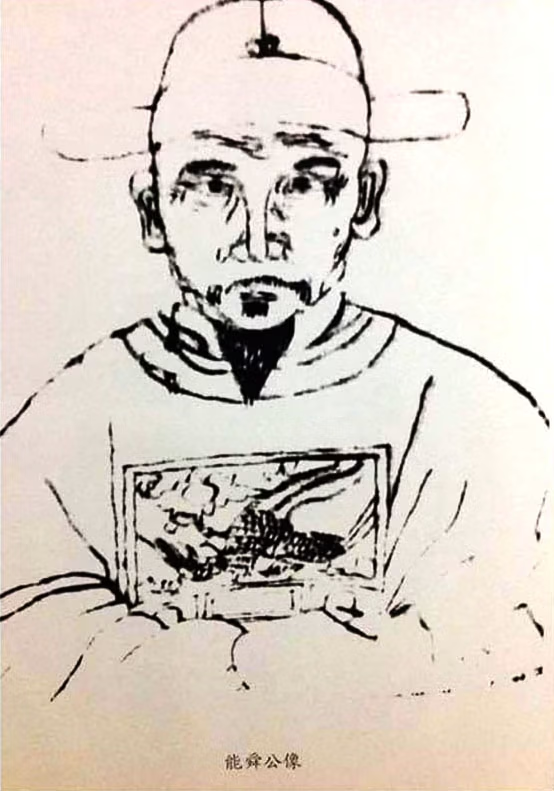
Fujian Seah Clan Founder Neng Shun Gong
Seah Neng Shun, descendant of Seah Ming (eldest son of Seah Qin), served as the County Magistrate of Putian, Fujian in 1311, and was promoted to Judicial Commissioner of Shaozhou Prefecture, Guangdong in 1329, moving from Fujian to Guangdong and establishing residency there. Seah Neng Shun’s third son, Seah Han Qing, later moved from Shaozhou to Chaozhou. Their descendants now live in Hanzhou Town in Raoping County, Nan’ao County, Lufeng Gaotian, and Shunde Magang. The You Zhi family, who guarded Yuan Chonghuan’s tomb for nearly 400 years, were from Magang.
Neng Shun Gong moved from Xixian County, Anhui to Magang, Shunde, Guangdong, and then to Putian. He had three sons. The eldest son, Gui Qing, had two sons: Xuan Ze and Xuan Run. They moved to Magang Town in Shunde, and between 1947-1949, most families relocated to Hong Kong. Currently, several dozen households still reside in Shunde, Zhongshan, and Magang Town. The second son, Ren Qing, remained in Putian (with descendants in Gangbian, Xiamen, Dongmao, and some who moved to Hong Kong, Philippines, and Taiwan). The third son, Han Qing, moved to Shantou and Jieyang, with nearly a thousand descendants in the Teochew-Swatow region, some of whom have settled in Malaysia and Singapore.